Kenexa Psychometric Tests

Short on time? Let Our Kenexa Experts take your test for you — across numerical reasoning exam, or a behavioral questionnaire and more.
We are so confident in Our Services, that we offer a full refund immediately if you do not pass your Personality Test!

We support ALL test providers, including:

Kenexa Psychometric Tests
Cubiks Psychometric Tests
Saville Psychometric Tests
Cut e Psychometric Tests

How to Pass or Cheat Kenexa Assessments

Every year, thousands of job applicants sit down to take an IBM Kenexa assessment, and a significant number of them immediately start Googling ways to cheat. Whether you’ve been asked to complete a Kenexa Prove It Excel test, a numerical reasoning exam, or a behavioral questionnaire, the pressure is real. Landing your dream job can feel like it hinges on a single timed test, and that creates a powerful temptation to look for shortcuts. But here’s the thing most “cheat Kenexa tests” articles won’t tell you: the system is specifically designed to catch people who try to game it. This guide breaks down every major Kenexa assessment format, honest preparation strategies that actually work, the common cheating methods people attempt, and why most of those methods backfire spectacularly.

Understanding Kenexa Assessment Formats and Categories
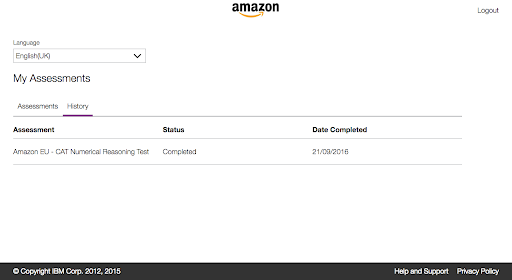
IBM Kenexa Talent Assessments cover a surprisingly wide range of test types, and understanding what you’re actually facing is the first step toward performing well. The test battery you receive depends entirely on the employer and the role. A retail management candidate might get the Kenexa BMQ (Business Managers Questionnaire), while a data analyst applicant could face a combination of numerical reasoning and a Prove It skills test. The Kenexa Infinity Series and the Kenexa CAT (Computer Adaptive Test) format add another layer of complexity because they adjust difficulty based on your answers in real time, meaning no two test-takers see the exact same questions.

Kenexa Prove It! Skills Testing

The Prove It series measures practical, hands-on proficiency in software applications. The most common version is the Kenexa Prove It Excel test, which asks you to perform real tasks inside a simulated spreadsheet environment: creating formulas, formatting cells, building pivot tables, and using functions like VLOOKUP or SUMIF. There are also Prove It tests for Word, PowerPoint, typing speed, and data entry.
What makes these tests tricky is that they don’t ask you to answer multiple-choice questions about Excel. They drop you into a simulated application and tell you to do something. If you don’t actually know how to use the software, you can’t fake it. The test records your actions, your accuracy, and how long each task takes you.

Numerical and Verbal Reasoning Exams
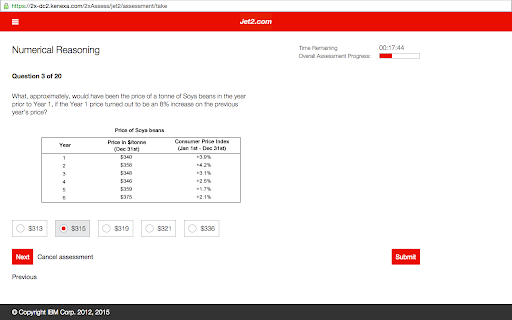
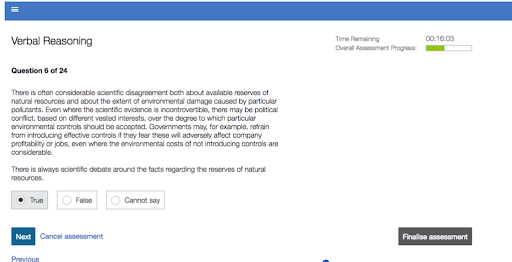
The Kenexa Numerical Reasoning Test presents you with charts, tables, and data sets, then asks you to draw conclusions, calculate percentages, or identify trends. You typically get about 60 to 90 seconds per question. The Kenexa Verbal Reasoning Test gives you passages of text and asks whether statements are true, false, or cannot be determined based solely on the information provided.
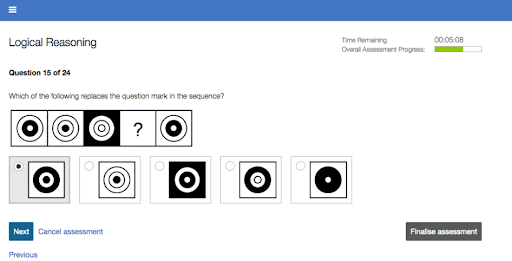
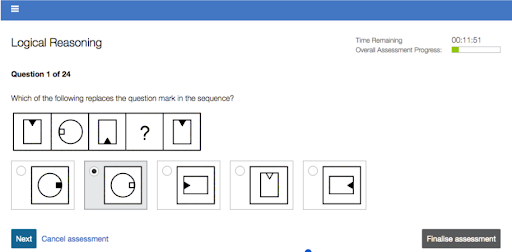
Then there’s the Kenexa Logical Reasoning Test, also called abstract reasoning, which uses pattern recognition with shapes and sequences. No words, no numbers, just visual logic. These three test types form the core cognitive assessment battery, and they’re designed to measure raw aptitude rather than learned knowledge.

Behavioral and Personality Profiles
Beyond cognitive tests, many employers include Kenexa Performance Indicators (KPI) or Career Fit, Culture Fit, and Job Fit questionnaires. These aren’t pass-or-fail in the traditional sense. Instead, they build a personality profile and compare it against the traits that successful employees in similar roles tend to share. The BMQ for retail and hospitality roles, for example, measures things like customer orientation, stress tolerance, and team collaboration tendencies.
These behavioral assessments use consistency checks, meaning they ask the same underlying question multiple ways throughout the test. If your answers contradict each other, the system flags your results as unreliable.

Preparation Strategies for High Performance

Mastering the Time-Per-Question Ratio

The single biggest reason people fail Kenexa assessments isn’t lack of knowledge. It’s running out of time. The CAT format is especially punishing because spending too long on a difficult question eats into time you need for easier ones. A good rule of thumb: if a reasoning test gives you 20 minutes for 18 questions, you have roughly 66 seconds per question. Spend the first 10 seconds understanding what’s being asked, then work through it. If you’re stuck after 45 seconds, make your best guess and move on.
Practice under timed conditions at least three times before your actual test date. Use a kitchen timer or phone stopwatch. The goal isn’t just getting answers right; it’s getting them right fast enough.

Utilizing Practice Tests and Sample Questions
Free and paid practice tests exist for every major Kenexa format. For the Prove It Excel test specifically, open a real spreadsheet and practice the 20 most common Excel functions until they’re muscle memory. For numerical reasoning, work through ratio, percentage, and data interpretation problems daily for at least a week before your test. Verbal reasoning practice should focus on distinguishing between what a passage actually says versus what you might infer or assume.
For personality and behavioral assessments, there’s no “studying” in the traditional sense, but you can familiarize yourself with the question format. Answer honestly and consistently. Trying to guess what the employer wants to hear almost always triggers the inconsistency flags built into these instruments.

Common Methods Attempted to Bypass the System

External Help and Proxy Test Taking
Some candidates try to pay someone to sit their Kenexa tests for them. Services like PassPsychometric and similar outfits advertise exactly this: you hand over your login credentials, and a supposed expert completes the assessment on your behalf. The appeal is obvious, but the problems are numerous.
First, you’re giving a stranger access to a portal that contains your personal information and is linked to a potential employer. Second, if the role requires a verification test or an in-person follow-up assessment (and many do), you’ll need to replicate a score you didn’t earn. Employers increasingly use verification testing during onboarding or even during interviews, where you’re asked to repeat a shorter version of the same test while someone watches. If your in-person score drops dramatically from your remote score, the offer disappears.
Third, the person you’re paying has zero accountability. If they perform poorly or the test gets flagged, you have no recourse. You’ve already paid, and you’ve already lost the opportunity.

Browser Manipulations and Search Tactics

Another common approach involves opening a second browser tab to Google answers during the test. Some candidates try using screen-sharing software so a friend can see the questions and feed them answers in real time. Others attempt to screenshot questions and search for them on forums.
The reality is that most Kenexa tests run inside a secured browser environment or use proctoring software that monitors your screen activity, webcam feed, and even your mouse movements. Switching tabs or opening new applications triggers alerts. The CAT format also makes searching for answers largely pointless because the questions adapt to your performance level, and the specific question you’re seeing may not exist in any online database.

The Risks and Realities of Cheating on IBM Kenexa

Anti-Plagiarism and Proctoring Safeguards

IBM has invested heavily in assessment integrity. Modern Kenexa assessments can include webcam proctoring, keystroke analysis, browser lockdown technology, and IP address verification. Some tests flag unusual response patterns, like answering every question in exactly the same amount of time (which suggests someone is reading answers from a prepared sheet rather than actually working through problems).
The Prove It tests are particularly hard to cheat on because they simulate real software. You can’t Google “how to create a pivot table” and apply the answer in time when the clock is running and the simulated Excel environment doesn’t let you leave the test window.

Consequences of Flagged Assessment Results
When an assessment gets flagged, the outcome is almost always worse than simply failing. Employers don’t typically tell you your results were suspicious. They just reject your application and, in many cases, add a note to your candidate file. Some large employers share assessment vendor platforms, meaning a cheating flag at one company could follow you to applications at others using the same IBM Kenexa system.
If you’re caught after being hired, termination is the standard response. Most employment contracts include clauses about dishonesty during the hiring process, and a fraudulent assessment result gives the employer clear grounds for immediate dismissal. The reputational damage in industries where hiring managers talk to each other can be career-altering.

Optimizing Your Setup for Test Day Success

The most effective thing you can do has nothing to do with cheating. It’s about controlling your environment and your preparation. Take the test on a desktop or laptop with a stable internet connection, not on a phone or tablet. Close every unnecessary application. Use a wired ethernet connection if possible, because a dropped WiFi signal mid-test can cost you your session.
Choose a quiet room where you won’t be interrupted. Have a calculator, scratch paper, and a pen ready for numerical sections (most tests allow physical scratch work even if they restrict digital tools). Take the test during a time of day when you’re mentally sharp. If you’re a morning person, don’t schedule it for 10 PM.
For the Prove It Excel test, spend three to five days beforehand practicing formulas and formatting in an actual spreadsheet. For reasoning tests, do at least 50 practice questions under timed conditions. For behavioral assessments, simply answer honestly and don’t overthink it.
The candidates who score highest on Kenexa assessments aren’t the ones who found clever workarounds. They’re the ones who prepared seriously for two weeks, understood the test format before sitting down, and treated the assessment like the job interview it actually is. Your time is better spent practicing than searching for ways to cheat a system that’s been specifically engineered to catch you.